

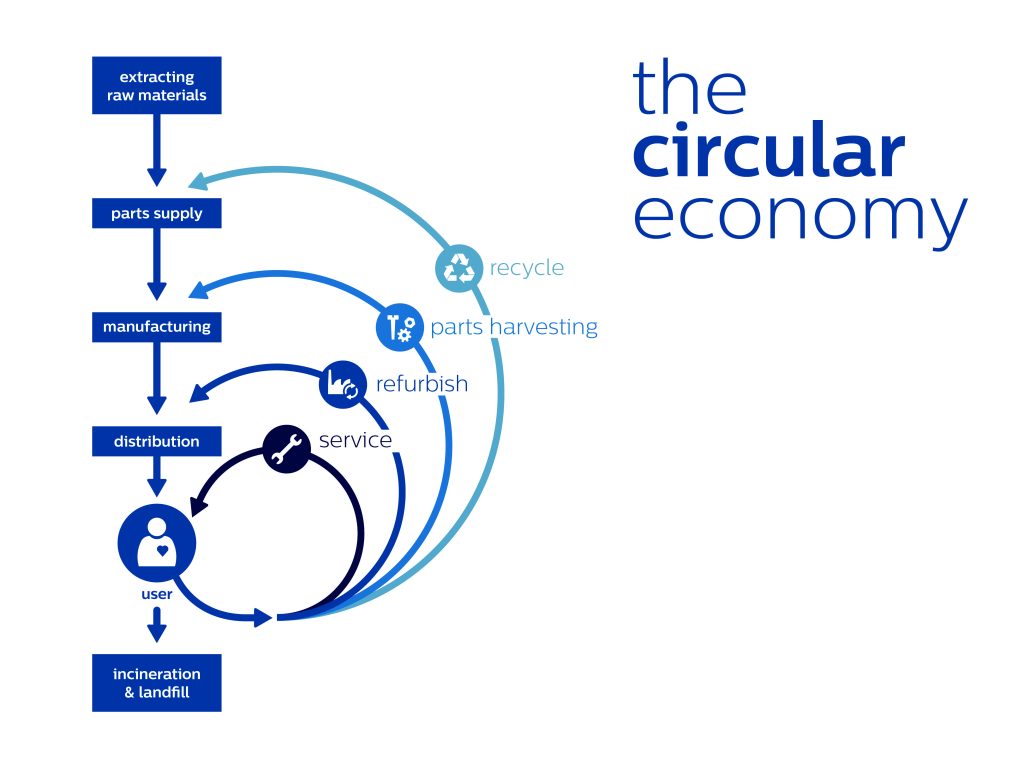
Let’s be honest — the old “take, make, waste” economy is running on fumes. For decades, businesses treated resources like they were infinite and the planet like a bottomless landfill. Well, that bill is coming due. And smart companies aren’t just paying it; they’re redesigning the entire system.
Enter regenerative business models and circular supply chains. These aren’t just buzzwords for sustainability reports. They’re a fundamental shift in how value gets created, shared, and yes, restored. If that sounds ambitious… good. It should.
What Exactly Is a Regenerative Business Model?
Most people get the idea of “sustainable” — do less harm. Regenerative goes further. It means leaving things better than you found them. Think of it like this: sustainability is treading water. Regeneration is swimming upstream and planting trees along the bank while you go.
A regenerative business model actively restores ecosystems, communities, and resources through its core operations. Not as a side charity project. As the business itself.
Patagonia’s worn-wear program? Regenerative-ish. Interface’s carpet tiles that capture carbon? Definitely. But the concept scales far beyond niche eco-brands.
Circular Supply Chains: Closing the Loop for Good
Now, circular supply chains are the operational backbone of regenerative models. Instead of a linear flow — extract, produce, sell, toss — materials loop back into the system. Over and over.
Here’s the deal: a circular supply chain designs out waste from the start. Products are built to be repaired, remanufactured, or fully recycled. Packaging returns. Components get harvested. Even biological waste becomes compost or biogas.
It’s not just nice for the planet. It’s financially sharp. McKinsey estimates circular strategies could unlock $4.5 trillion in economic value by 2030. That’s not pocket change.
Key Principles of a Circular Supply Chain
- Design for durability and disassembly — if you can’t take it apart, you can’t loop it back.
- Reverse logistics — getting used products back from customers, efficiently.
- Material passports — digital records tracking what’s inside every product.
- Sharing and service models — leasing instead of selling, so you keep ownership and responsibility.
- Industrial symbiosis — one company’s waste becomes another’s raw material.
Sure, these sound technical. But in practice? It’s just good housekeeping at scale.
Why This Matters Right Now
Three forces are colliding. First, resource prices are volatile — remember when lumber and lithium spiked? Second, regulators are tightening. The EU’s circular economy action plan, extended producer responsibility laws, and carbon border adjustments are no joke. Third, consumers and employees are watching. They want to work for and buy from companies that aren’t actively torching their future.
Honestly, the pain point is simple: linear supply chains are fragile. A single port closure or drought can snap them. Circular ones? They bend. They adapt. They keep going.
Real-World Examples That Aren’t Just Greenwashing
Let’s look at a few companies actually walking the walk.
| Company | Regenerative/Circular Move | Result |
|---|---|---|
| Interface | Carbon-negative carpet tiles, take-back program | Reduced virgin material use by 80%+ |
| IKEA | Buy-back and resell furniture, renewable materials | Circular hub in every store by 2025 |
| Danone | Regenerative agriculture for dairy and water | Soil health up, emissions down |
| Philips | Lighting-as-a-service, remanufactured parts | Customers pay per lux, not per bulb |
| Ecover | Refill stations, biodegradable formulas | Plastic waste slashed dramatically |
Notice a pattern? None of these are perfect. But they’re iterating in public. That’s the point.
How to Actually Build a Regenerative, Circular Operation
You don’t flip a switch. You rewire the whole building. Here’s a practical sequence that works for most organizations — from startups to legacy manufacturers.
Step 1: Map Your Linear Leaks
Where does waste happen? Not just physical trash — energy, water, time, talent. Every leak is a cost and an opportunity. Audit your supply chain from extraction to end-of-life.
Step 2: Redesign for the Loop
Work with designers, engineers, and suppliers. Can you use fewer materials? Can components snap together instead of glue? Can you standardize parts across product lines? Small changes compound.
Step 3: Build Reverse Logistics
This is the hard part. Getting products back requires incentives, drop-off points, shipping deals. But once it runs, you own a stream of free raw material. That’s a moat.
Step 4: Partner Across Industries
One company’s slag is another’s cement. One’s coffee grounds become another’s mushroom farm. Industrial symbiosis isn’t new — Kalundborg, Denmark has done it since the 1970s. But digital platforms now make matchmaking easier than ever.
Step 5: Measure What Matters
Track circularity rate, material reuse percentage, carbon stored (not just reduced), and community impact. If you don’t measure regeneration, you’ll drift back to extraction.
Common Myths — Busted
- Myth: Circular is too expensive. Truth: linear is expensive — you just pay later in supply shocks and reputation damage.
- Myth: It only works for small brands. Truth: Walmart, Unilever, and Apple all have circular pilots at scale.
- Myth: Consumers don’t care. Truth: 73% of global consumers say they’d change habits for less environmental impact (Nielsen).
- Myth: Regeneration means going back to pre-industrial times. Truth: It means using high-tech, high-design, and high-collaboration to do better than before.
The Bottom Line (No Sales Pitch, Just Reality)
Regenerative business models and circular supply chains aren’t a trend. They’re a correction. A long-overdue one. The companies that treat materials as borrowed — not owned — will be the ones still standing when resources get tight and regulations get real.
And here’s the quiet part: this isn’t just about survival. It’s about building something worth passing on. A supply chain that gives back. A business that heals instead of harms. That’s not naive. That’s just smart, long-game thinking.
So next time you look at your product, your packaging, your logistics — ask one simple question: Does this loop, or does it leak? The answer will tell you everything about your future.


More Stories
Building a Remote-First Company Culture in Traditional Industries
Business applications of spatial computing for logistics
B2B Micro-Community Building Strategies: How to Turn a Niche Into a Network