


Let’s be honest. When you’re in the middle of a high-stress support scenario—maybe your flight got canceled, your bank account is frozen, or your internet went down right before a deadline—the last thing you want is a robot. You want a human. You want someone who gets it.
But here’s the thing. Automation isn’t going anywhere. It’s faster, cheaper, and scales like crazy. So what if we could blend the two? What if automation could actually feel a little more human? That’s where empathy-driven automation comes in. And honestly? It’s not as sci-fi as it sounds.
What exactly is empathy-driven automation?
Well, it’s not about giving a chatbot a sad face emoji. It’s about designing automated systems—chatbots, IVR menus, email responders—that recognize emotional cues and adapt accordingly. Think of it like a smart friend who knows when to joke and when to just listen.
In high-stress scenarios, empathy-driven automation does three things:
- Detects distress — through keywords, tone, or repeated frustration.
- Adjusts tone and pace — slowing down, using softer language, or offering immediate relief.
- Escalates gracefully — handing off to a human without making the customer repeat themselves.
It’s not about replacing empathy. It’s about scaling it. You know, like a warm blanket that can cover a thousand people at once.
Why high-stress support needs a different approach
Here’s the deal. Normal support is like ordering a pizza. You’re hungry, you wait, you get your pizza. High-stress support is like… your house is on fire and you’re trying to call 911 but the line keeps dropping. The stakes are higher. The emotions are raw.
In these moments, customers aren’t just looking for information. They’re looking for validation. They want someone to say, “I see you’re upset, and that’s okay. Let’s fix this together.”
Traditional automation fails here. It’s rigid. It repeats itself. It makes you press 1 for billing, 2 for tech support, and 3 to scream into the void. That’s not empathy. That’s a maze.
But empathy-driven automation? It can actually de-escalate tension. Imagine a chatbot that, after detecting angry keywords like “ridiculous” or “unacceptable,” pauses and says: “I hear you. That sounds really frustrating. Let me prioritize you right now.”
That small shift can turn a screaming customer into a cooperative one. And that’s gold for any support team.
Real-world examples (that actually work)
Let’s look at a few places where empathy-driven automation is already saving the day—and the sanity.
| Scenario | Traditional Automation | Empathy-Driven Automation |
|---|---|---|
| Flight canceled | “Please visit our website for rebooking.” | “I’m sorry you’re stuck. I’ve checked your options—here’s the fastest one.” |
| Bank card declined | “Your transaction failed. Try again.” | “That must be stressful. I’ll check your account and offer a solution.” |
| Medical billing error | “Please call during business hours.” | “I know medical bills are confusing. Let me break this down clearly.” |
See the difference? It’s subtle but powerful. The second version acknowledges the emotion first, then solves the problem. That’s the core of empathy-driven automation.
How to build it (without losing your mind)
Alright, so you’re sold on the idea. But how do you actually do it? Here’s a rough roadmap—no fluff, just steps.
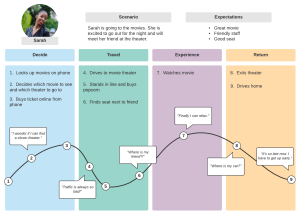
- Map the emotional journey. Where do customers get frustrated? Angry? Scared? Plot those moments.
- Train your AI on empathy. Use real transcripts. Highlight phrases that de-escalate vs. those that inflame.
- Build in fail-safes. If the system detects high distress, it should automatically offer a human handoff.
- Test with real people. Not just QA bots. Real humans who will yell at your prototype.
- Iterate like crazy. Empathy isn’t static. What works today might feel robotic tomorrow.
One thing I’ve learned? Don’t over-engineer it. Sometimes the most empathetic response is just: “I’m sorry. Let me fix this.” No fancy words. No AI poetry. Just… presence.
The tech stack (simple version)
You don’t need a million-dollar system. Most empathy-driven automation runs on:
- Natural Language Processing (NLP) — to understand sentiment and intent.
- Dynamic response libraries — pre-written but context-aware replies.
- Escalation APIs — to connect to live agents when needed.
- Feedback loops — so the system learns from every interaction.
Sure, it’s not plug-and-play. But it’s closer than you think. And the ROI? Massive. Lower churn, higher satisfaction, and way fewer screaming calls.
But wait—doesn’t automation kill jobs?
That’s the fear, right? But honestly? Empathy-driven automation doesn’t replace humans. It protects them. Think about it: support agents in high-stress environments burn out fast. They deal with anger all day. Automation can handle the first wave—the repetitive vents, the basic info—and only hand off the nuanced, high-touch cases.
So agents get fewer, but more meaningful, interactions. They’re not drained by the 50th “Where’s my refund?” call. They’re fresh for the one where a customer is genuinely in crisis.
That’s not job loss. That’s job rescue.
Common pitfalls (and how to dodge them)
Look, I’ve seen empathy-driven automation go wrong. Here’s what usually happens:
- Over-apologizing. Saying “sorry” too much can feel insincere. Apologize once, then act.
- False empathy. If a bot says “I understand” but then gives a useless answer, it’s worse than silence.
- Ignoring context. A customer who’s angry about a late delivery doesn’t want a joke about pizza.
- No escape hatch. If the system can’t hand off to a human, frustration compounds.
The fix? Always test with real stress. Simulate a crisis. See if your automation makes it better—or worse. And for heaven’s sake, let people talk to a human if they want to.
The future is… kinda warm and fuzzy?
I don’t think we’ll ever have a fully automated support world. And we shouldn’t. But we can have a hybrid—one where machines handle the noise, and humans handle the heart.
Empathy-driven automation isn’t about tricking people into thinking they’re talking to a human. It’s about making the machine earn the right to be part of the conversation. By showing respect. By listening. By knowing when to step aside.
So next time you design a support flow for a high-stress scenario, ask yourself: “Would I want to talk to this thing if I were panicking?” If the answer is no… go back to the drawing board. Add a little warmth. A little patience. A little… empathy.
Because in the end, automation isn’t the enemy of empathy. Bad design is.


More Stories
Support Experience Personalization Using Behavioral Segmentation
Customer Support for Digital Accessibility Tools and Users
The role of AI co-pilots in augmenting human support agents