

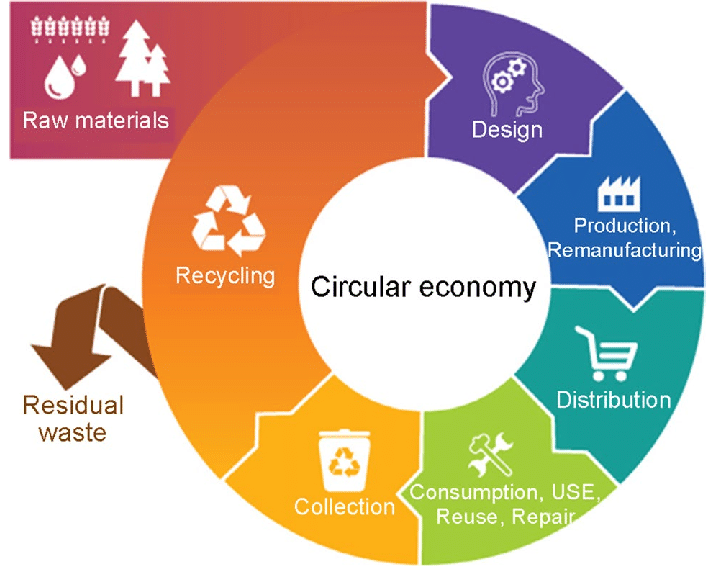
Let’s be honest — branding a circular economy startup isn’t like branding just another app or a trendy D2C snack. You’re selling a vision where waste isn’t waste, where products breathe, get repaired, and come back to life. That’s a heavy lift. And yet, the startups that get this right don’t just sell more — they become movements.
So, how do you build a brand that feels authentic, not preachy? A brand that cuts through greenwashing fatigue? Here’s the deal: it starts with ditching the old playbook. Circular branding isn’t about a logo slapped on a recycled tote. It’s about weaving regeneration into every touchpoint. Let’s dive into what actually works.
Why Traditional Branding Falls Flat for Circular Startups
Most branding frameworks assume linear growth: make, sell, discard, repeat. Circular startups flip that. Your value proposition often depends on take-back schemes, repair loops, or sharing models. That means your brand must communicate systems thinking, not just product benefits.
Take Patagonia’s Worn Wear program. They didn’t just add a repair service — they built a brand identity around “don’t buy this jacket unless you need it.” That’s radical. And honestly, it works because it’s coherent. No mixed signals.
For a startup, the pain point is real: you’re often educating the market while selling to it. Your brand has to do double duty — teach and attract. That’s exhausting if you rely on generic “eco-friendly” messaging.
Core Principles of Sustainable Branding for Circular Models
1. Radical Transparency (Not Just a Page on Your Website)
Consumers are skeptical. A 2023 study found that 68% of shoppers distrust brands’ sustainability claims. So, don’t just say “we’re circular.” Show the messy parts. Publish your material sourcing maps. Share your repair rates. Admit where you’re still linear. That vulnerability builds trust faster than a polished impact report.
2. Design for Disassembly — In Branding Too
Your brand should be modular. Think of it like a product that can be taken apart and reassembled. That means flexible visual identities, tone that adapts to context (a repair tutorial vs. a funding pitch), and messaging that doesn’t collapse when you pivot your business model. Circular startups pivot a lot. Your brand shouldn’t shatter.
3. Make the User the Hero, Not Your Startup
Here’s a subtle shift: instead of “we save the planet,” try “you just kept 12 kg of textile waste out of landfill by choosing this.” That’s a world of difference. People want to feel capable, not guilt-tripped. Your brand is the guide, not the savior.
Practical Branding Tactics That Actually Move the Needle
Alright, enough theory. Let’s get tactical. These are approaches I’ve seen work for early-stage circular ventures — and some that flop hard.
Storytelling That Circles Back
Linear stories end. Circular stories loop. Use narrative arcs that show return — a product coming back, a material reborn, a customer’s second life with your brand. For example, a shoe repair startup could follow one pair of boots across five years and three owners. That’s a brand asset, not just a blog post.
Visual Language of Loops and Patina
Forget pristine, sterile minimalism. Circular brands often embrace patina, visible mending, and organic textures. Think earthy tones, but not cliché. A repair marketplace might use photos of scratched surfaces and hand-stitched seams. That signals: we value wear, not perfection. It’s a sensory cue that says “this brand gets it.”
Partnerships as Brand Extensions
You can’t do circular alone. Partner with repair cafés, municipal recycling programs, or even competitors for take-back logistics. Each partnership is a branding opportunity. Co-branded collection bins, shared return labels, joint workshops — these reinforce that you’re part of an ecosystem, not a lone wolf.
Common Pitfalls (And How to Sidestep Them)
Even well-intentioned startups trip up. Here are a few traps I’ve seen — and quick fixes.
- Greenwashing by accident: Using vague terms like “eco-conscious” without proof. Fix: Use specific numbers and third-party certifications.
- Over-indexing on guilt: Shaming customers for past linear choices. Fix: Celebrate small wins. “You recycled one bottle? That’s 0.1 kg of plastic saved. Nice.”
- Inconsistent circularity: A brand that shouts “zero waste” but ships in virgin plastic. Fix: Audit every touchpoint. Your packaging, your website host, your swag — all of it.
- Ignoring the reverse logistics story: Customers don’t know how to return items. Fix: Make take-back as easy as buying. Prepaid labels, drop-off maps, pickup scheduling.
Measuring Brand Success Beyond Sales
Sure, revenue matters. But for circular startups, brand health includes other signals. Track these:
| Metric | Why It Matters |
|---|---|
| Return rate for repair/recycling | Shows if customers trust your loop |
| Repair success rate | Direct proof of circularity |
| Customer stories shared | Organic advocacy vs. paid ads |
| Partnership inbound requests | Brand pull in the ecosystem |
| Employee pride score | Internal brand alignment |
Honestly, that last one — employee pride — is underrated. If your team rolls their eyes at your own sustainability claims, your customers will too. Branding starts inside.
Where Do You Start? A Simple 30-Day Brand Sprint
Feeling overwhelmed? Here’s a lightweight sequence. No agency required.
- Week 1: Map every customer touchpoint. Mark where circularity happens (or should).
- Week 2: Write three “loop stories” — real or hypothetical. Share them with five customers. Watch their faces.
- Week 3: Audit your visual and verbal language. Remove any word that could appear on a linear brand’s site (e.g., “disposable,” “new,” “upgrade”).
- Week 4: Launch one transparent artifact — a repair log, a material passport, a waste dashboard. Link it from your homepage.
That’s it. No massive rebrand. Just small, honest moves that compound.
The Long Game: Brand as a Living System
Circular branding isn’t a campaign. It’s a garden. You plant seeds — a repair guide here, a take-back bin there — and you tend them. Some fail. Weeds grow. But over time, you build something that feels alive. Customers don’t just buy from you; they participate in your loop.
And that’s the quiet power of sustainable branding for circular startups. You’re not selling a product. You’re inviting people into a different rhythm — one where things come back, where value circulates, and where a brand can be a verb, not just a name.
So, next time you tweak your logo or write a tagline, ask: does this loop, or does it end? The answer will shape everything.


More Stories
Dark Social Attribution for Privacy-First Marketing
Zero-click content marketing strategies: How to win without a single click
Generative AI Transparency in Marketing Copy: Why Honesty Isn’t Just Ethical—It’s Smart